
By Aaron Buchwald
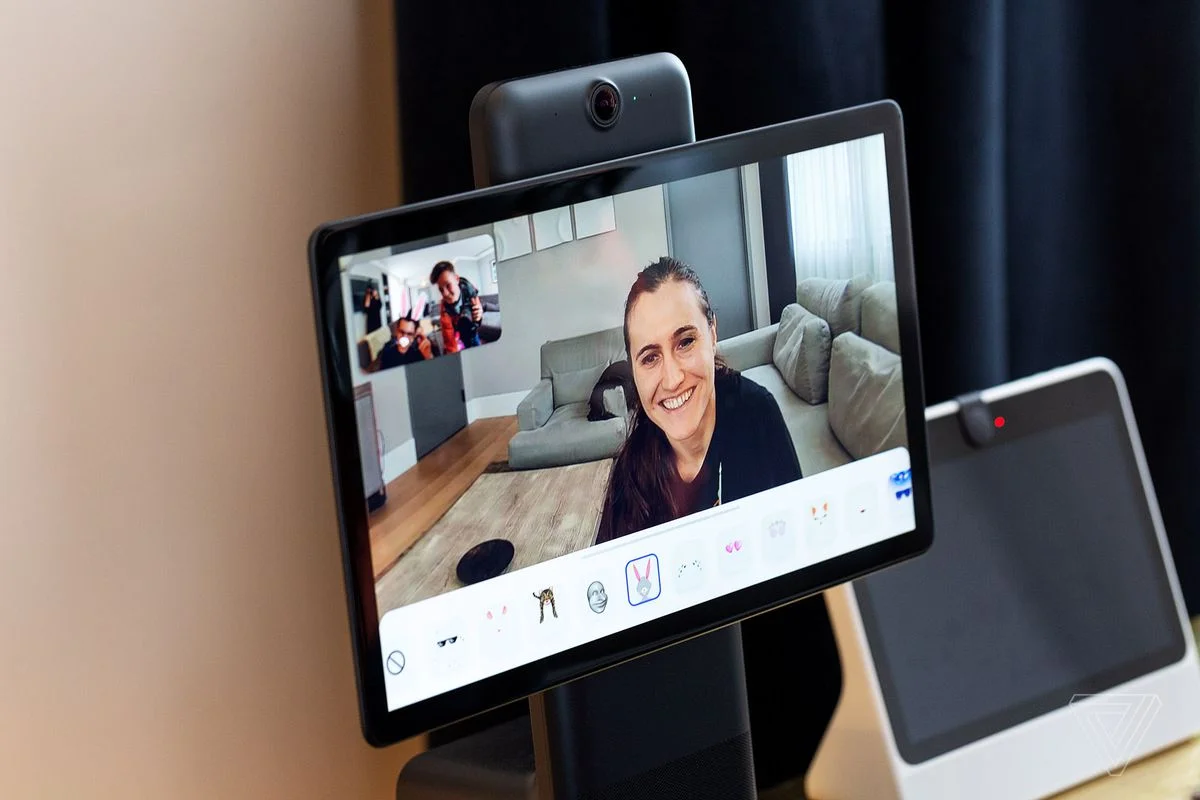
Facebook has just released one of the most tone deaf products to date. Months after undergoing a Congressional investigation for data privacy concerns related to the presidential election of 2016, they release Portal. Portal is Facebook's next generation video calling device intended exclusively for people to dial up their Facebook friends. Using artificial intelligence, Portal tracks the user as they move about the room so that they're never out of the screen. Set it up once, and it will follow you and size the image to and resize the image to make sure you're always perfectly in the middle of the screen.
Easy to use? Absolutely.
A good idea for a company in the middle of a data privacy scandal? Maybe not the best timing.
Portal has already been heavily criticized by newspapers and privacy advocates that have not hesitated to repeat their same data privacy concerns associated with Facebook. It's largely seen as an even more obtrusive move into people's private lives by a company struggling to maintain the public's trust. It's undoubtedly a bad time for Facebook to be making a sales pitch for Portal. The move is not without redeeming qualities, though.
It’'s as good a time as any for Facebook to start to dip its toes in the smart speaker market, and there's good reason to think that Facebook will be a strong competitor. Although Amazon Alexa got the early jump on the competition, Google Home has already shown that the market is still competitive by quickly overtaking Alexa's lead in market share. Facebook's Portal doesn't currently have any virtual assistant capabilities, but Facebook's heavy investment in AI puts it in a league with Google and Amazon.
In the field of conversational AI, Facebook has already separated itself from the competition for its focus on using graphics. The appeal of using conversational AI to conduct a normal conversation is high and hard to avoid, but successful Facebook Messenger Bots have shown that leveraging graphics to display information to people usually provides a better user experience. Allowing users to respond in a free form conversational manner, but still using graphics when appropriate to convey information in the easiest to understand way has been the longstanding best practice for Facebook Messenger for Business.
Facebook also committed itself to AR/VR with its early acquisition of Oculus in 2014. Since then the giant has struggled to find much success commercializing the platform, but there could be great possibilities for facebook to leverage these capabilities into a new virtual assistant on Portal or a similar device.
Amazon Alexa and Google Assistant are currently in control of this highly lucrative market, but if Facebook were to try and move into the market it would be extremely well positioned to leverage their AI expertise, AR/VR, and understanding of conversational UX principles into a well designed assistant. The market is still young and if Facebook can get over its trust issues with the public it would be better positioned than perhaps any alternative on the market to create a virtual assistant to manage users' social lives.