

In 2009, Patricia Jones walked into Hudson Valley Brain and Spine, a well-known neurosurgical group, for a “routine” surgery– a decision that would change her life. The 56-year-old payroll manager from Rockland County reported tingling in her arms, hands, and neck, and chose to seek care from the respected medical group. During the procedure to relieve her pain, a bone fragment was lodged in the spinal cord’s protective covering, resulting in a cord contusion. However, doctors failed to properly assess the injury and proceeded with the operation. The result: Jones left as a quadraplegic. "On August 18th, Patricia Jones walked into Good Samaritan Hospital," Jones’ lawyer told the jury during her medical malpractice suit. "What she didn't know is that those would be the last steps that she would ever take."

Sprinkled across the gilded facade of corporate industrialism is a myriad of independently owned businesses. In 2025, 36.2 million small businesses make up 99% of all businesses in the United States, yet they are probably not what first comes to mind when we hear the word “business.” Not only are they overshadowed by corporate giants, but the 35% of small businesses that survive for 10 years are usually “dull normal,” monotonous services, safe private investments.

The art world’s semblance of opacity and exclusivity is perpetuating an intimidation that keeps many people from one of the most fulfilling, human forms of investment there is. While most people are aware of the art world, many feel removed from even a basic understanding of its operative functions and institutional value. But for young professionals who will soon be building their financial portfolios, familiarizing oneself with the art world and its breadth of potential as both a passion and asset class can transform financial strategy into a creative practice.
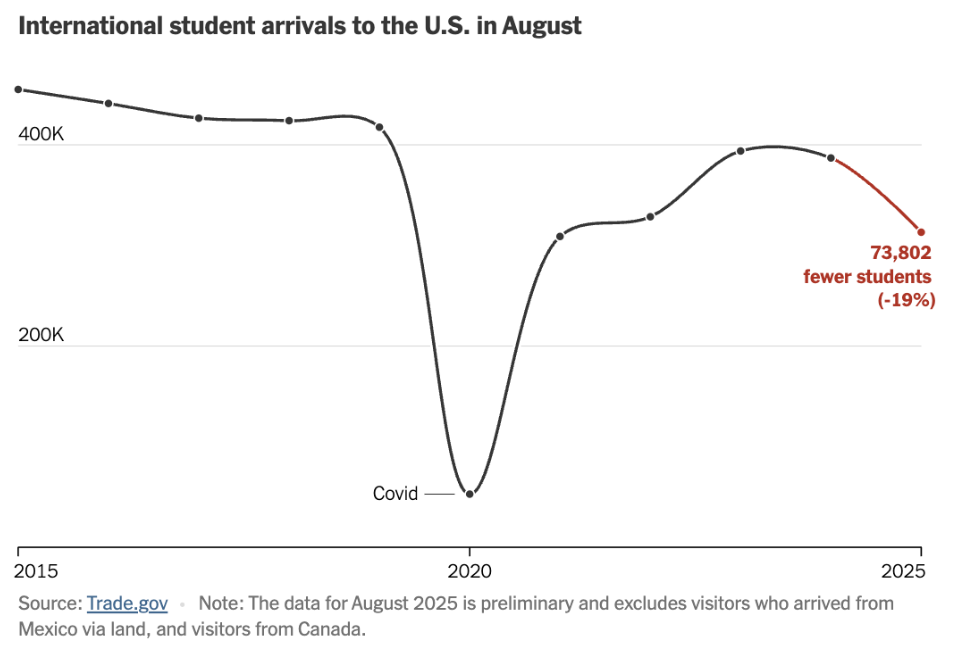
For international students graduating into a competitive job market, understanding the pathway from student to working professional requires careful planning. For them, “dreaming big" often means fighting the clock: 60 days to secure a job, 12 months to prove your value, and one lottery that can decide your future. This article aims to explore the current situation of F-1 students and the economic impact of changes surrounding enrollment and employment.
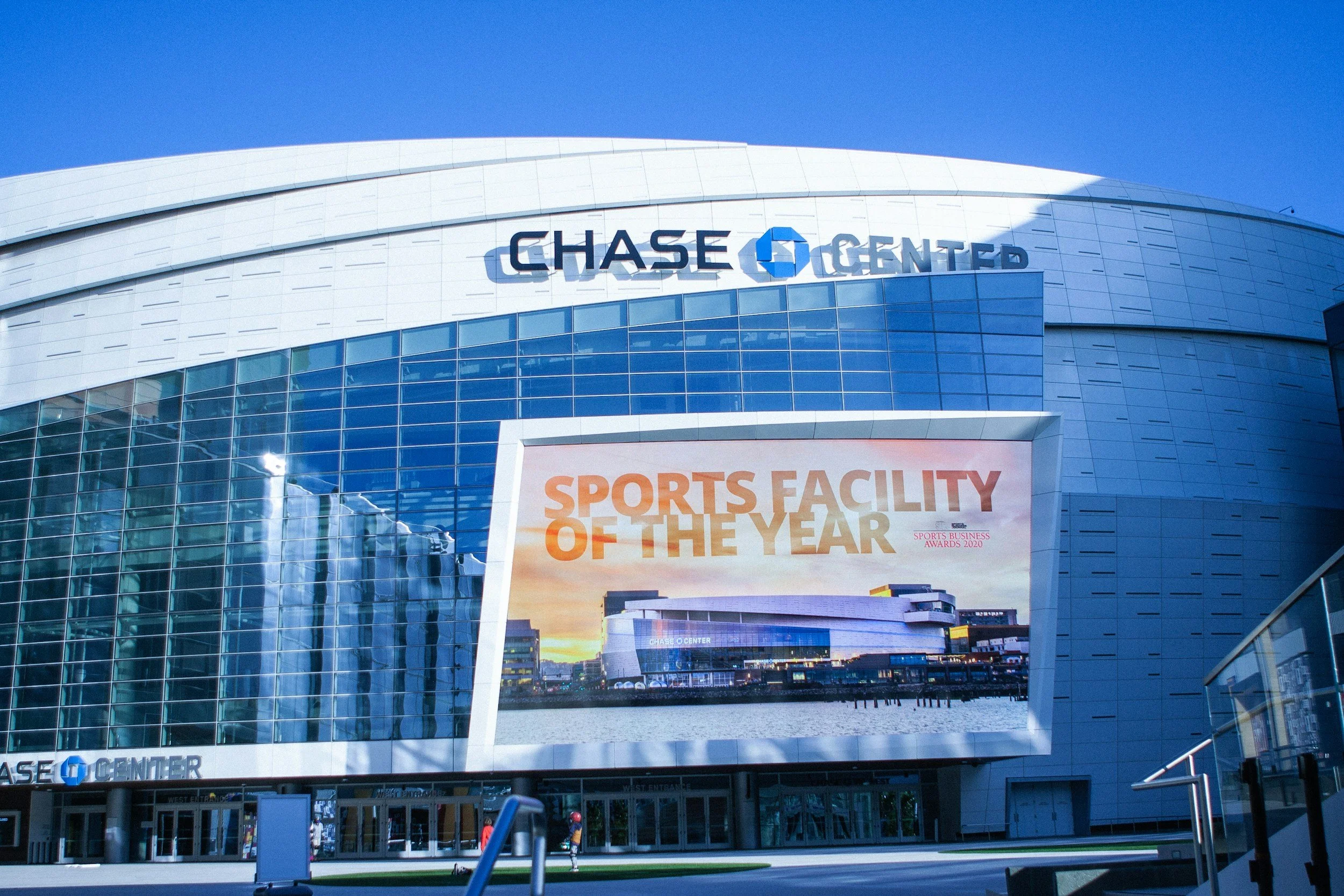
Six years ago, billionaire owner Joe Lacob led his NBA franchise, the Golden State Warriors, to complete a $1.5 billion expansion into their newly constructed Chase Center. This marked a business expansion strategy that moved the 40-year franchise from Oakland to the Bay Area in 2019. Initially launched in January of 2017, this expansion project partnered with investment bank J.P. Morgan Chase, who acquired the naming rights of the arena by agreeing to pay the Warriors $300 million over 20 years. Although Chase Center’s full seating capacity is only 18,064 — significantly less than Oracle Arena’s 19,200 — the expansion project proved to be immensely successful in the six years since completion.
Every time I go home to New York City during school breaks, I find myself spending most of my time in SoHo, the beloved shopping district for the young people of Manhattan. SoHo is where I take my friends to shop, run into old high school classmates, and bump into other Cornell students on the main street. It makes sense that this is where all of Gen Z congregates to chase the newest fashion trends. Brandy Melville and Aritzia are the crowd favorites, of course, but SoHo is also home to vintage thrift stores and luxury brands. The bustling environment is such a stark contrast from the collegetown that I left behind in Ithaca.

Following Season 4’s release in February 2026, Bridgerton once again topped Netflix’s global top 10 list. The second part of the season saw viewership surge over 800% compared to the first, cementing the show’s continued success. Since its initial release in December 2020, Bridgerton continues to be one of Netflix’s most successful shows, boasting over 240 million total hours watched. While Bridgerton is a show set in 19th-century England with period-accurate sets and customs, one of the reasons for its enduring popularity comes from the integration of modern elements. Specifically, the show incorporates orchestra covers of modern pop songs throughout episodes, such as “360” by Charli XCX and “Wildest Dreams” by Taylor Swift. In addition, Bridgerton features an inclusive and diverse cast, and attempts to provide commentary on modern social issues like that of gender and class inequality.

Every day, thousands of Cornell students rush to various coffee shops around Collegetown. Le Cafe, Forty Weight, the iconic Collegetown Bagels. Walk into each of these locations (especially during finals week), and you might notice something strange. People aren’t just buying a $4 coffee; they are buying a temporary workspace. A place to study for an hour or two, knock out a pesky problem set, or meet for a group project. This raises the question: how do coffee shops make money when customers occupy space far longer than their purchases justify? Coffee shops are therefore not only in the beverage service business, but also in the complicated real estate optimization business. They must look to efficiently monetize their physical space.

Wielding a chainsaw in crowded public areas, say the American Conservative Political Action Conference (CPAC), may get some arrested for reckless endangerment. But Argentine President Javier Milei has made the chainsaw both a prop and political credo. In February, Milei ran up to the CPAC stage, enthusiastic to gift a chainsaw. The recipient was Elon Musk, then a special government employee of the US Department of Government Efficiency (DOGE). Brandishing it onstage to symbolize his philosophy of hacking away at state excess, Milei has applied the same approach back home. Since taking office in December 2023, the economically libertarian president has implemented austerity measures, a shock-therapy program aimed at breaking Argentina’s inflation spiral.

For the first time ever, the women's sports market is projected to surpass $2.5 billion in global revenue by the end of 2025. This revenue surge is driven by the rise of sports leagues like the Women’s National Basketball Association (WNBA), which is projected to reach $1 billion in revenue this year, and the National Women’s Soccer League (NWSL), which is projected to bring in over $66 million in team sponsorship revenue alone. In particular, projections for the WNBA’s 2025 revenue have surpassed $1 billion, up by around 43% from $710 million in 2024. Star players, such as Caitlyn Clark and Paige Bueckers, have introduced the league to tens of thousands of new fans, driving revenue and jersey sales. While the WNBA holds a significant share of the women’s sports market, it is not the only women’s sports league that has seen growing success in recent years.

My old economics teacher liked to advise us to move out of America to Canada for their free healthcare. Looking back, he said this too often for it to have been just a light-hearted joke. Anyone who knows a little about the economics of the US healthcare system has probably heard that it’s more complicated and more expensive than that of most other developed countries. It’s like patchwork: there are public programs like Medicare and Medicaid for more vulnerable populations, but most Americans are covered by private health insurance, which gets costly fast. As an archetype of capitalism, minimal government regulation, high levels of competition, and profit-driven companies increase prices for a system that takes care of our well-being.
For eighty years, the US dollar has been the anchor of global finance – the currency of oil deals, central bank reserves, and international debt. Yet, in 2025, that anchor started to drag. The dollar’s value tumbled against major currencies, while the Euro and Yen surged and central banks stockpiled gold and silver as hedges. The world isn’t abandoning the dollar overnight, but it is clearly preparing for a life not centered around it.
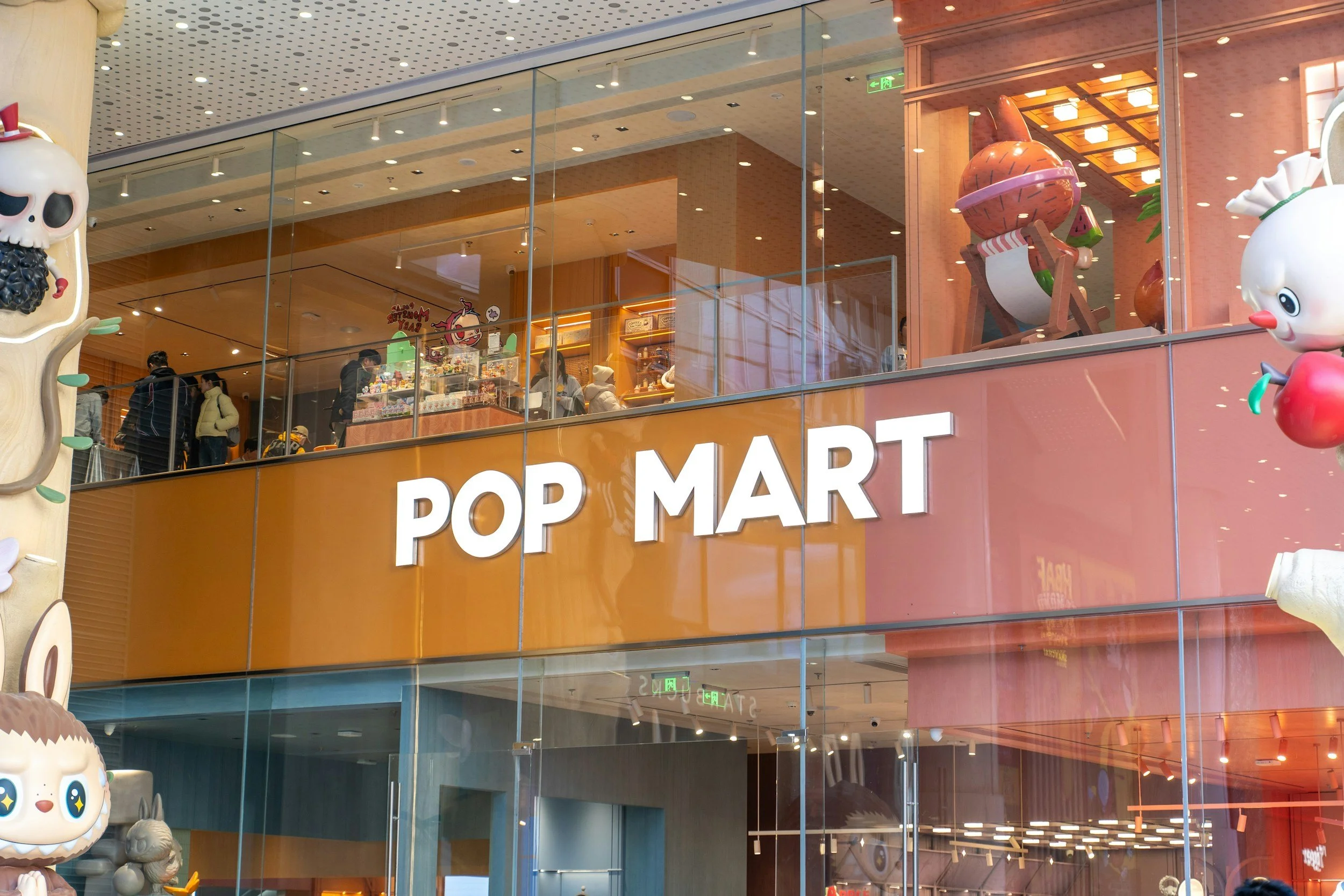
Over the past decade, the toy industry has undergone a wave of innovation, where technology and creativity collide to redefine play. From hoverboards that promise futuristic advancements to AI-powered robots that blur the line between toy and companion, innovation has become the toy industry’s lifeblood. However, amid this technological revolution, it is often the simplest ideas that capture the world’s attention. Such a concept is the Blind Box: a sealed package that contains randomly distributed toys and products, so the buyer is oblivious to what toy they will receive out of the given options.

Within recent years, consumer trends and statistics demonstrate a mass movement into the health and wellness realm. Across many food and beverage sectors, there’s an increasing demand for the development of various high-protein applications, including extruded/texturized products, confectionery goods, bars, beverages, fermented foods, and more. Global demand for high-protein products and ingredients is predicted to continue rising from 66.8 billion dollars at a compound annual growth rate of 6.2% until 2030.

The jewelry industry exemplifies several key macroeconomic trends. These include international supply-chain disruptions, a depreciating dollar, asset speculation, and asymmetric pandemic recovery. The highly competitive and relatively decentralized market consists of manufacturers, wholesalers, and retailers. Low production volume of luxury goods makes the industry particularly responsive to changes in demand. Moreover, around 85% of all American domestic demand is satisfied by international producers, meaning tariff threats on finished jewelry remain high.

Few industries show the clash between tradition and innovation as vividly as global fishing. The centuries-old livelihood has developed into a nearly trillion-dollar supply chain that feeds the world, employs millions, and drives technological innovation. It’s made up of two main pillars: aquaculture and wild-catch fishing.

You’re scrolling through Zara’s app at midnight. The total hits $200, but Klarna flashes a promise: four payments of $50. It feels lighter already. You pay the $50 today, and the following three installments are automatically drawn from your bank account biweekly. Buy Now Pay Later platforms( BNPL) like Klarna, Afterpay, and Affirm, create the illusion of affordability for consumers by reframing spending into more manageable “micro-debts.” They offer customers the instant gratification and the dopamine hit of making an exciting purchase, without the dread of immediate financial harm.

In October of last year, The Biden administration passed a sweeping executive order on artificial intelligence. The order signaled a new era of oversight for a technology that, since its initial public emergence in the fourth quarter of 2022, operated with minimal guardrails. The wide-ranging directive tasks federal agencies with crafting regulations and voluntary guidance to manage risks from advancing AI systems, the most prominent of which are offered by firms including OpenAI, Google, and Anthropic. Though the executive order does not introduce new laws, instead directing federal agencies to employ existing statutory authorities, the President’s directive demonstrates that a laissez-faire approach to AI governance is over.

Microchips, oil, and everyday goods’ prices are rising, and interest rates are increasing at the fastest rate since 1981. Until recently, it has never been cheaper, easier, and faster to ship goods across the world — so why has this changed? Since the first COVID-19 lockdowns in 2020, shipping has been anything but straightforward. The once-efficient “just-in-time” shipping method is faltering in the face of disruptions and supply chain executives around the world are scrambling for answers.

Imagine searching the internet for updates on a global event, information on a candidate in an election, or some historical account you need for a school paper. You stumble across the perfect headline under your Google search results—from a reliable source like the New York Times or the Washington Post—you go for the click, and suddenly, your access is denied by a paywall. We’ve all been there: being blocked from reading the perfect piece just because you reached your monthly free article limit on that publication. That is, unless, you subscribe.

Rdio - a now virtually defunct company - was once a streaming music service provider offering an expansive catalog of 7M+ songs. Launched in 2010, it enjoyed a first mover advantage in the then-nascent media streaming market. Rdio is a curious yet compelling case study vis-à-vis its eventual Chapter 11 bankruptcy and subsequent intellectual property sale to Pandora in 2015. Rdio, despite a superior product offering and first mover advantage, was afflicted by flaws in its business model due to missteps in leveraging the attractive qualities of information goods, lack of a sound pricing model, and poor execution in building network effects to gain market dominance – the sum effect of which was responsible for its drastic, albeit puzzling, failure.

Spotify’s share price has plummeted to less than $100 a share (as of May 2022), down from a February 2021 high of $365, despite beating earnings and growth projections in April. Of course, rising rates tend to hit growth stocks the hardest, but Spotify’s slide is particularly devastating considering its sluggish pre-pandemic performance. To understand Spotify’s slide, we should consider two key factors: “winner take all” dynamics in two-sided marketplaces as well as the changing competitive landscape of the music streaming industry.

In the face of widespread economic and political uncertainty in Latin America and Africa, the United States has withdrawn from the international community in favor of isolationist policies. Over the past 40 years, the international community has condemned the United States on multiple accounts for corporate and territorial over-extensions and other neocolonial tendencies. Consequently, the United States has reacted by gradually receding from its spheres of influence, with recent manifestations in former President Trump’s withdrawals from NAFTA and the Trans-Pacific Partnership as well as President Biden’s military withdrawal from Afghanistan.

Michael Polk is currently an Advisory Director at Berkshire Partners, a private equity firm, and the Chief Executive Officer of Implus LLC. He was previously the CEO for Newell Brands, President and COO of Unilever, President of Nabisco at Kraft, and a member of the board of directors of the Retail Industry Leaders Association, Enactus, The Yankee Candle Company. He is also currently on the board of directors for both Logitech and Colgate-Palmolive. Mr. Polk holds a Bachelor of Science from Cornell University where he studied operations research and industrial engineering. He also holds an MBA from the Harvard Business School. Mr. Polk enjoys ice hockey and acapella, and was a member of the Glee Club during his time at Cornell.

By Anya Gert
In today’s ever-changing music ecosystem, music streaming services have become the most efficient method of audio distribution, discovery, and connection. Many, especially the younger generation of listeners, are easily attracted to Spotify; for a reasonable subscription price, Spotify provides a platform for accessible music streaming and organizing. Self-starting artists are granted the ability to publicize their music and develop a small following. However, monetarily supporting your favorite artists on Spotify is not nearly as easy as consuming their content.

By Maria Alexander
The COVID-19 pandemic presented challenges to many, but also fostered creativity, resilience, and innovation. Many industries, including the art industry, have become more reliant on digitalization to recover markets once dependent on in-person experience and interaction.

By Isabella Picillo
Sustainability is one of the most prominent trends in designer fashion, trumping statement-making trousers and voluminous dresses season after season. Although sustainability in fashion has been a conversation for decades, it gained momentum towards the end of the 20th century when fashion became cheaper and more accessible, largely due to globalized manufacturing. In the 1990s, several companies, such as Nike, were exposed for their environmentally harmful practices, which gave rise to “eco-fashion.” Yet the start of sustainable fashion as we know it today began in the early 2010s. Consumer sensitivity, particularly to forced labor, combined with ecological concern as the conditions of fast fashion workers became apparent, such as in the 2013 Dhaka garment factory collapse.

By Saurin Desai
Amazon is no stranger to dominating. Using its near-monopolistic market position, vendor exclusivity contracts, expansive distribution network, and low-cost differentiation strategy, Amazon frequently out-competes rivals—which has led to a staggeringly high 50% market share in the US and nearly $400bn in annual revenues. However, for a company the size of Amazon, there is limited scope for additional domestic expansion, underscoring the need for foreign market entry to sustain returns to shareholders.
By Philip Matteini
In the mid-1950s, the semiconductor industry was run primarily in East Coast cities such as Boston and New York. Seeing an opportunity, a recent Harvard MBA named Arthur Rock convinced former employees of the failed Shockley Semiconductor Laboratory to form their own company in Palo Alto. With the financial backing of New York entrepreneur Sherman Fairchild, the group formed Fairchild Semiconductor in October of 1957.

By Nick Weising
Cannabis, whether recreational or medicinal, is now legal in 36 states. On March 31st, the state of New York legalized recreational marijuana, adding the Empire State to the large list of states with legal cannabis. Likewise, the Biden Administration and Democratic Congress may further loosen federal enforcement. This is a dramatic turn from the state of legalization just a few years ago, largely because of changing public perception. Once seen as a hard narcotic, marijuana is now largely viewed more mildly, with state governments seeking to tap into marijuana-related tax revenues.